Four things to do with moringa leaf
Beyond the smoothie. Stews, a seasoning salt, a cold brew and one that surprised us.
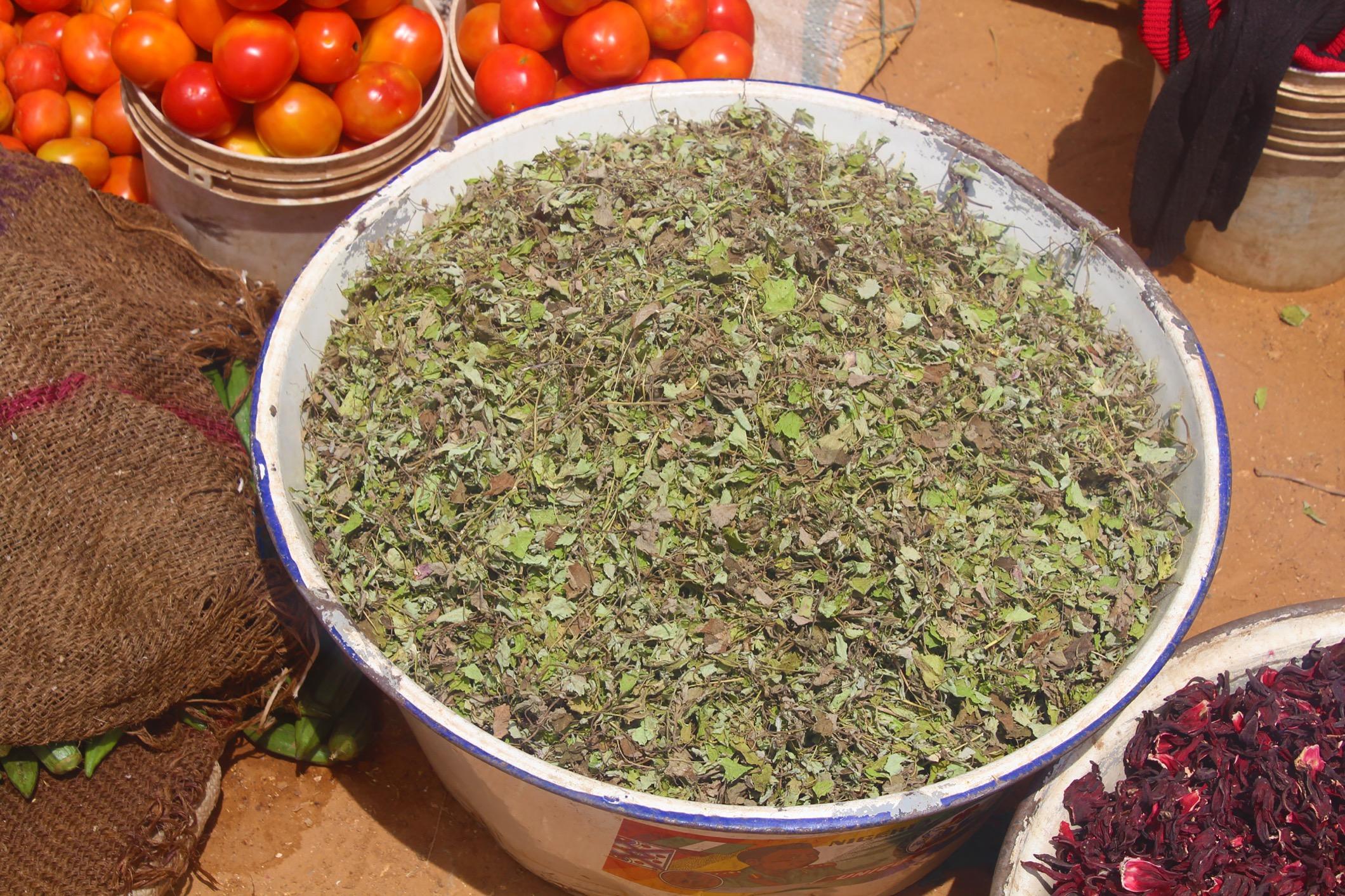
Moringa arrived in most kitchens as a powder in a smoothie, which is a shame, because zogale has been food in northern Nigeria for a great deal longer than it has been a wellness ingredient. The leaf is a genuinely good source of protein, calcium, iron, beta carotene and vitamins C and E, and none of that requires a blender.
A note on the leaf itself first. We dry ours in the shade rather than in sun or an oven, which is why it stays green. The research is less one sided than that makes it sound: shade drying holds antioxidant activity better, while sun and oven drying actually preserve total phenolics and flavonoids well. We choose shade because colour is the honest signal a cook can see, and a grey leaf tells you very little about how it was handled.
1. Into the stew, late
The oldest use and still the best one. Moringa goes into soups and stews the way any tender green does, which means at the end rather than the beginning. Ten to fifteen minutes of gentle heat is enough to make it tender. Longer than that and you lose both the texture and a good deal of what you added it for.
If you are using dried leaf, add it in the last five minutes and expect it to drink liquid. Fresh leaf goes in later still, closer to two or three minutes, stirred through off the heat.
2. Kwadon zogale
The northern moringa salad, also called datun zogale, and the dish most worth learning if you only learn one. Steamed leaves, dressed, eaten as a side. It is the preparation that treats moringa as a vegetable with its own character rather than as a supplement hidden in something else.
Steam until just tender, dress while still warm so it takes the dressing, and do not be shy with onion and pepper. The leaf is mild and slightly grassy and it will take a lot of seasoning before it stops tasting like itself.
Moringa was food in the north long before it was a wellness ingredient. The kitchen uses are the old ones.
3. A seasoning salt
This is the one that earns permanent shelf space. Blitz dried moringa leaf with coarse salt, roughly one part leaf to three parts salt, and add whatever else you want in there: dried chilli, onion powder, a little dried ginger.
It goes on eggs, on roast vegetables, on grilled fish, on rice. Because the leaf is already dry, the mix keeps for months in a sealed jar, and it is the easiest way to get moringa into a household that has no interest in drinking it.
4. A cold brew, and the one that surprised us
Moringa makes a decent cold infusion. A tablespoon of dried leaf per litre, twelve hours in the fridge, strained. It comes out green and grassy with a slight sweetness, closer to a green tea than to anything herbal, and it is far better cold than the hot version, which turns vegetal fast.
The surprise was oil. We were making the seasoning salt, had leaf left over, and warmed a handful gently in groundnut oil for about ten minutes over the lowest heat available, then left it to sit and strained it the next day.
What comes out is a green finishing oil with a soft, nutty, faintly peppery flavour. It is very good over boiled yam, over beans, over anything plain and starchy that wants a green note. Keep the heat low, because the point is to infuse the oil and not to fry the leaf. Fried moringa tastes like fried moringa.
Buying and keeping it
Colour is the first check and it is a real one. Moringa dried out of direct sun stays green. Leaf that has gone grey, khaki or olive has been dried hot, dried in full sun, or stored in light afterwards, and while it is not spoiled it has lost the thing you were buying it for.
Smell is the second. Good dried moringa smells green and faintly of hay. Leaf that smells of nothing has been sitting, and leaf that smells musty was dried too slowly or bagged before it was ready.
Keep it sealed, cool and dark, and keep it away from the window it will inevitably end up next to. Light does more damage to dried leaf in a kitchen than time does. Whole leaf holds better than powder, because powder has vastly more surface exposed to air, so buy whole and grind what you need if you are using it slowly.
We supply leaf, powder and seed. The seed is a different conversation entirely, better known for water clarification than for cooking, and worth its own entry.
Store it in the fridge and use it within a couple of weeks. Any home infused oil should be treated as perishable, and this one is worth making fresh anyway.