Hibiscus keeps its colour in the open north
Dry heat and hard sun do work no dehydrator can match. Notes from a Katsina harvest.
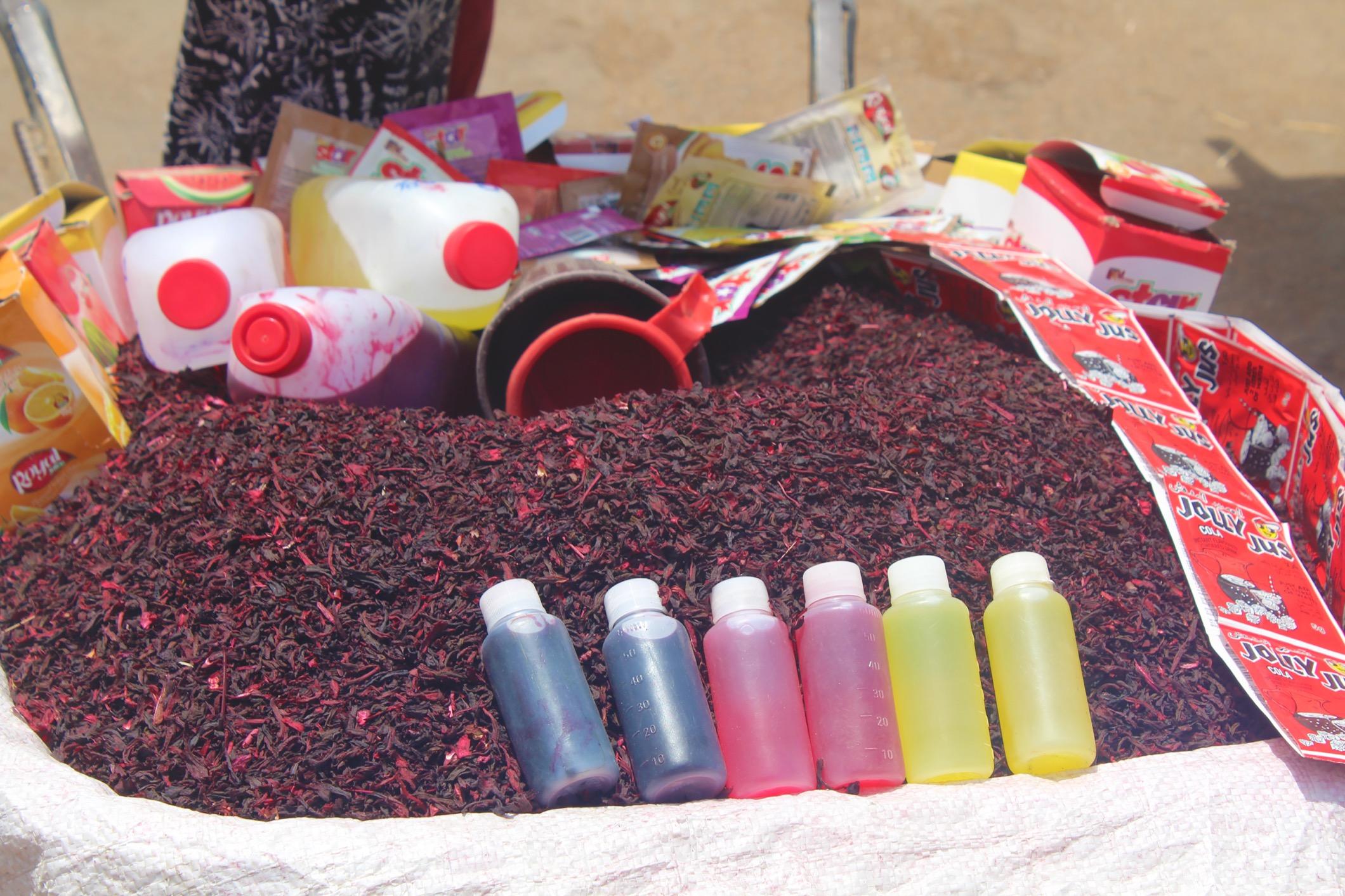
The first thing you notice at a hibiscus collection point in Katsina in January is that nobody is in a hurry. Calyces come in from the field and go straight onto mats in the open. There is no shed, no fan, no heater. For a crop whose entire commercial value is a colour, that looks careless until you understand what the weather is doing.
Roselle grows across the northern belt, with Kano, Katsina, Jigawa, Bauchi and Zamfara carrying most of the volume. The crop comes off between November and April, which places drying inside the driest, brightest, least humid stretch of the Nigerian year. In the Sudan and Sahel savanna during those months you get low rainfall, hard sun and very low ambient humidity, and a calyx spread thin on a mat loses water fast and evenly.
Why the colour survives
The red in hibiscus is anthocyanin, and anthocyanins are heat sensitive. Push them through a high temperature dryer to save time and you buy speed with pigment. The colour dulls towards brown, and since colour is what beverage and natural colourant buyers are paying for, a dull lot is a discounted lot.
Open air drying in the north sidesteps the problem by never applying much heat at all. Ambient temperature and low humidity do the work over days rather than hours. It is slower, it depends entirely on the season behaving, and it is the reason Nigerian hibiscus out of these states consistently tests at the high end of the commercially traded anthocyanin range.
Nigeria is one of the leading exporters of dried hibiscus, moving into beverages, teas and natural colourants across Europe, Asia and North America. That trade runs on colour, and colour runs on the weather in the months the crop comes off.
The dry season is the dehydrator. Everything else is just handling.
What can still go wrong
Sun does the drying, but the ground does the damage. Calyces dried on bare earth pick up sand and grit that show up later as foreign matter, and a lot that has been rained on once will carry mould however well it dries afterwards. The difference between a clean lot and a discounted one is usually mats, raised platforms and somebody watching the sky.
The other risk is over-drying. A calyx taken too far goes brittle and shatters in transport, and shattered calyx drops out of whole grade into cut grade, which is a different and lower price. The window between properly dry and too dry is narrower than people expect.
Three grades, three buyers
Dried hibiscus leaves the north in three forms and they are not interchangeable.
Whole calyx is the premium form and the one that trades on appearance. It is what you want if the product will be seen, either loose on a shelf or through a window in a pack. It commands the best price and it is the most fragile to transport.
Cut is calyx broken down to a consistent size, which suits blenders who are mixing hibiscus with other botanicals and need it to behave like the other ingredients in the bag.
Tea grade is smaller still, sized for filling bags, where extraction speed matters more than how it looks.
The important point is that these are not quality tiers so much as different jobs. A lot that shatters badly in transport drops out of whole grade and into cut, and that reclassification is where a lot of margin quietly goes. It is also why how a crop was dried matters twice: once for colour, and again for whether the calyx holds together long enough to be sold as whole.
What buyers test for, beyond colour, is moisture and foreign matter. Both are handling questions rather than growing questions, which is to say both are decided after the crop leaves the field.
What we buy
We take hibiscus as whole calyx, deep red, in 20kg baled cartons, and we can supply it whole, cut or as tea grade depending on what you are doing with it. Whole is the right call for anyone selling on appearance, cut suits a blender, and tea grade goes to people filling bags.
If you are buying this crop, look at it in daylight and look at the bottom of the carton. The top layer of a bale is always the best of it. What has settled to the bottom is fines, grit and shattered calyx, and that is the honest measure of how a lot was dried and handled.