What a grower cluster actually is
Forty or fifty smallholders, one collection point and a price agreed before planting.
"Cluster" is one of those words that has been used loosely enough to stop meaning much. It gets applied to cooperatives, to out-grower schemes, to anything involving more than one farmer and a buyer. So it is worth setting out what we mean by it, because the specific shape matters more than the label.
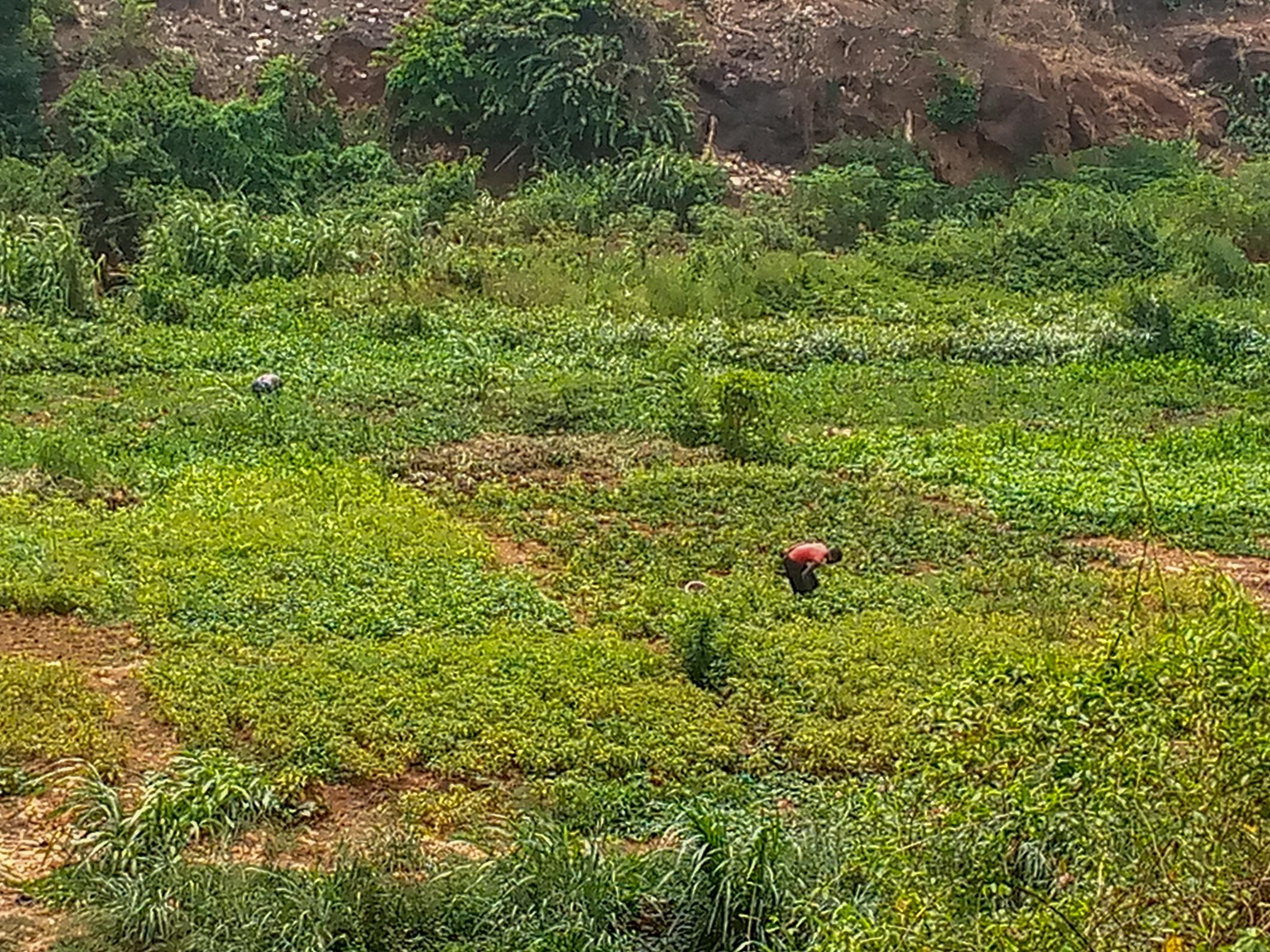
A cluster, for us, is forty or fifty smallholders farming near each other, one collection point they can all reach, and a price agreed before the crop goes in the ground. That is the whole structure. It is not a legal entity, it does not have a constitution, and nobody joins it by filling in a form.
Why the number is forty or fifty
Aggregation exists to solve a transaction cost problem. Buying from one smallholder with two hectares is not commercially sensible for anyone: the volume is too small, the trip is too long, and the paperwork per kilo is absurd. Buying from four hundred farmers spread across three local government areas solves the volume problem and replaces it with a coordination problem that is just as expensive.
Forty or fifty growers within reach of one collection point is the size where both problems get small at once. It is enough volume to fill trucks and hold a contract. It is few enough that the person running the collection point knows every name, has seen every plot, and can tell you which grower dries properly and which one needs watching.
Larger models exist and work. The in-grower and out-grower structures used at scale in Nigeria run cooperatives of a hundred to a hundred and fifty farmers managing production blocks of around five hundred hectares. That is a different instrument for a different job, usually with mechanisation and a processor anchoring the whole thing. It needs formal governance because it is too big to run on familiarity. Ours runs on familiarity, deliberately.
What the grower gets
Three things, in order of how much they matter.
A price before planting. This is the one that changes decisions. A farmer who knows what sesame will fetch can decide how much to plant, what to spend on inputs, and whether to commit the better plot to it. A farmer who finds out on delivery day is guessing all season.
A buyer who is already there. No transport to a distant market, no arriving on the day that everyone else in the area also arrives, no accepting whatever that day offers because carrying the crop home again is not an option.
Payment on collection. Covered at length elsewhere, and the reason clusters hold together across seasons rather than dissolving after one.
A farmer who knows the price before planting is making decisions. A farmer who finds out on delivery day is guessing.
What we get
Predictable supply, and influence over quality months before the crop exists.
The second one is the part that is hard to buy any other way. When we know which cluster a crop is coming from, we can agree how it will be dried, what it will be dried on, and when it will be collected. We can supply mats, or push for raised drying platforms, or simply time collection so the crop is not sitting in a compound absorbing humidity. None of that is possible when you buy finished bags from a market and inherit whatever happened to them.
It also gives us the record. Every lot we take carries the cluster it came from, the month it was harvested and the moisture reading at intake, and a cluster is a small enough unit for that record to mean something specific.
How one actually forms
Not by recruitment. Clusters form around somebody who already has standing.
There is usually a lead farmer, someone whose plot others already watch and whose judgement on timing is already trusted. That person is the entry point, and if they are convinced, the conversation with the next forty is short. If they are not, no amount of talking to individuals will assemble anything that holds.
The first season is small and largely a test. A handful of growers commit partial acreage, we buy what comes, and both sides find out whether the other does what they said. What matters in that season is not volume. It is whether we pay on the day, every time, including the times it is inconvenient.
The second season is when it becomes a cluster. Growers who were watching commit properly, and the conversation shifts from price to specifics: what we want the crop dried on, when we want to collect, what moisture we are buying at.
The collection point does the work
One physical location everyone can reach, and the practical constraint is whatever a loaded cart or a motorcycle can manage. Get that wrong and the furthest growers quietly stop coming, without ever saying so.
The person running it is the actual institution. They know who dries properly and who needs a visit, which plots flooded, who is likely to be short this season. That knowledge does not exist in any system we could buy, and it is the thing that makes forty or fifty the right number. Past a certain size, a person stops knowing and a process has to take over, and processes are considerably worse at this.
What it is not
It is not a cooperative. Cooperatives are a legal form with members, dues and elected officers, and plenty of them work well, but joining one is a commitment our growers have not made and do not need to make.
It is not a credit scheme. Nigeria has run large programmes on that model, including the Anchor Borrowers' Programme, which pushed credit through banks to out-growers tied to processors. Input finance is a real constraint and those schemes exist for a reason. It is simply not what we are doing, and we should not describe ourselves as though it were.
And it is not permanent. A grower who has a better offer next season takes it. The arrangement holds because it keeps being worth holding, which is the only durable version of it.